
Why Purpose-Driven Careers Can Still Lead to Burnout

Many individuals hope their work can make lives better, strengthen communities, or leave a lasting impact. Fields such as healthcare, education, counseling, nonprofit work, and therapy often attract individuals who care deeply about helping others. Having a sense of purpose can make work feel meaningful, even in challenging times.
At the same time, meaningful work does not automatically protect someone from exhaustion. In many cases, purpose-driven professionals put intense pressure on themselves because they care deeply about the outcome of their work.
Extended work hours, emotional pressure, and ongoing responsibilities can gradually wear down both mental and physical energy. Over time, this can lead to burnout, even among people who once felt deeply connected to their careers.
Understanding why burnout happens in meaningful professions can help individuals create healthier boundaries and more sustainable routines.
The Scale of the Problem
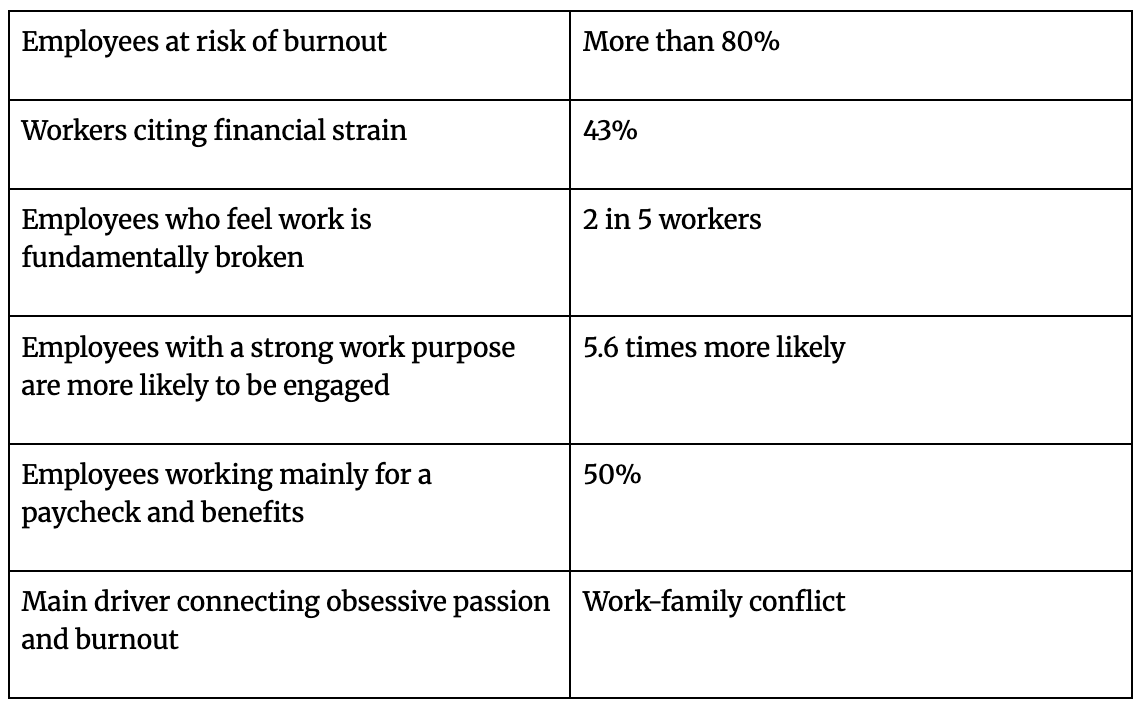
Burnout is far from an isolated problem; it has become a widespread workforce crisis. The Mercer 2024 Global Talent Trends Report states that over 80% of employees are at risk of burnout. Financial strain is cited by 43%, exhaustion by 40%, and excessive workload by 37%.
These numbers cut across all job types and sectors. They include mission-driven workers who chose their careers to make a difference.
The report also revealed that two out of five employees feel the modern workplace is fundamentally flawed. In addition, one in four workers wishes they did not have to work at all. This disillusionment runs even deeper among people who entered their fields with idealism and hope.
Purpose Can Protect, But Only Up to a Point
Research confirms that a sense of purpose at work does carry real benefits. Workers who feel a strong sense of purpose are 5.6 times more likely to stay engaged in their roles. They are also less likely to experience burnout or actively search for another job.
While that may sound encouraging, the data also reveals a gap. Just 18% of employees say their current role reflects a purpose they genuinely believe in. In contrast, half of the workers report that they mainly work for salary and benefits. Purpose-driven workers, then, are a motivated minority operating inside systems that may not support them.
Even among employees who feel a strong sense of purpose at work, 13% still say they experience burnout very often. This shows that purpose reduces the risk, but it does not eliminate it.
The Pressure of Balancing Multiple Responsibilities
Purpose-driven careers can become even more stressful when individuals try to balance multiple things. For example, some individuals may take on caregiving responsibilities for family members.
Similarly, many would want to continue higher education post-graduation to advance their career. Consider the example of speech-language pathology (SLP) experts, who usually work with children and adolescents.
According to Marymount University, a Master’s in SLP can help students understand historical and socio-political contexts. It can also get them acquainted with concepts like swallowing words. This can help pathologists excel in their careers.
Although career advancement can create new opportunities, the added pressure often increases emotional fatigue. Thankfully, technological advancements, such as online or remote programs, have made things easier. Enthusiasts can now enroll in online master’s SLP programs and study flexibly to cope with work and education simultaneously.
Similarly, occupational stigma is also a significant predictor of burnout among passion-driven employees. For workers in stigmatized or undervalued roles, a category that sometimes includes caregiving and therapeutic professions, the emotional load is compounded.
The Psychology of Compulsive Attachment
One reason purpose-driven workers are vulnerable is that caring can shift from a choice to a compulsion. Many join a career out of passion, but it soon becomes a pattern rather than a choice. Such situations tend to bring out the hidden problems associated with certain roles, including emotional depletion and a loss of self.
Caregiving professions offer a clear example of this pattern. Caregivers may gradually lose sight of their own needs, goals, and boundaries. Constant caregiving can become draining, allowing exhaustion and resentment to build over time.
The challenge is that it is difficult to identify when someone is experiencing burnout.
“I have never heard people say, I don't know what burnout is, can I take a test?” said Christina Maslach, a PhD holder in psychology.
For many purpose-driven workers, this pattern began long before their careers. In households where emotional support was unpredictable, some children learn to focus closely on others as a way to maintain connection. As adults, this habit may begin to feel like part of who they are rather than a learned behavior.
When Passion Becomes Obsessive
An MDPI study examined what scholars call the Dualistic Model of Passion. It draws a distinction between healthy and obsessive types of work engagement.
Obsessive passion reflects disproportionate commitment, which is often associated with emotional conflicts and burnout. It contributes to work-family conflict, making it difficult for individuals to detach from work and set healthy limits. In contrast, harmonious passion, in which work is meaningful yet balanced, is associated with higher satisfaction and lower exhaustion.
Crucially, the study found that obsessive passion does not directly cause burnout. Instead, it exerts its effects through work-family conflict, which accounts for nearly all of the relationship between obsessive passion and burnout. In other words, it is not caring too much that leads to collapse. It is caring in ways that erode the rest of life.
Harmonious passion, by contrast, reduces burnout risk partly by enhancing job satisfaction, which in turn serves as a buffer against exhaustion. The takeaway is not to care less but to care differently.
Frequently Asked Questions
Can burnout affect people who genuinely love their jobs?
Yes, loving a job does not prevent emotional or physical exhaustion. People who feel strongly connected to their work may ignore stress for longer because they believe passion should carry them through it. This mindset can delay recovery and make burnout more difficult to recognize until symptoms become more intense.
What effect does burnout have on relationships beyond the workplace?
Burnout can affect communication, patience, and emotional availability in personal relationships. Someone experiencing chronic stress may become withdrawn, easily irritated, or mentally distracted during conversations with family and friends. Over time, exhaustion from work responsibilities can reduce the energy needed to maintain healthy social connections and emotional closeness.
Are younger professionals more vulnerable to burnout in meaningful careers?
Many younger professionals enter purpose-driven careers with high expectations and strong emotional investment. They may struggle with perfectionism, pressure to prove themselves, or difficulty setting boundaries early in their careers. Without healthy coping habits, the combination of ambition and emotional labor can increase the likelihood of burnout.
Burnout and Workplace Purpose: Key Statistics at a Glance
Purpose-driven careers can be deeply fulfilling because they allow individuals to contribute to something larger than themselves. Assisting others, strengthening communities, and making a positive difference can provide deep emotional fulfillment and lasting satisfaction.
At the same time, even meaningful work cannot completely prevent burnout. Emotional labor, heavy responsibilities, and blurred boundaries can gradually create exhaustion, especially when people neglect their own needs. Flexible education options, healthier routines, and stronger boundaries can help reduce unnecessary stress and support long-term wellbeing.