
Practical Tips to Cope with Career Anxiety

Career anxiety can quietly erode confidence, productivity, and well-being. Feeling stressed about our careers is something we all go through. It usually happens when faced with an uncertain job market, a mountain of work, or that feeling of being off track in your career.
Layoff anxiety is perhaps the biggest concern. According to CNBC, 1 in 3 adults is grappling with layoff anxiety. It is hitting younger workers particularly hard, where 40% of Generation Z is feeling the pressure. While the job market appears strong, the ongoing economic uncertainty and high-profile layoffs are contributing to a significant level of anxiety.
The good news is that coping with career anxiety doesn’t always require dramatic life changes. Small, practical steps can reduce overwhelm, clarify priorities, and set you on a steadier path.
This article explores strategies to cope with career anxiety. You can use these tactics together to build resilience and move from anxious reactivity to deliberate career choices.
Break Down Goals
Ambitious goals often intensify anxiety when they feel too big or vague. You must break each goal into specific, time-bound, and measurable steps. You can use the SMART framework (Specific, Measurable, Achievable, Relevant, Time-bound), or opt for a simpler micro-goal method.
Scientific American states that you might think that breaking a big goal into smaller pieces is just a smart way to look at things. However, it is actually a highly effective strategy for setting goals used for almost any target. You may create a concise weekly plan with 2–3 priority tasks and treat all other tasks as secondary.
Consider incorporating time-blocking into your deep work routine. It can enhance your focus. Also, celebrate small wins, like finishing a draft, getting positive feedback, or learning a new tool. This way, your brain builds a positive feedback loop that counters anxiety.
Consider a Transition
Sometimes anxiety signals that your current role or career path isn’t a good fit. A transition doesn’t require instant resignation. It can be a deliberate, staged process. You can start by figuring out which values truly matter to you. Think about things like independence, making a difference, security, creativity, or financial gain. Then, compare those values to your current job to see how they align.
If you are someone who cherishes compassion and has a strong desire to lend a helping hand, choosing nursing as your career path is a good idea. An accelerated BSN nursing degree can give you a head start. This qualification empowers aspirants to merge expert clinical abilities with genuine compassion in their care.
According to Elmhurst University, you can choose an online learning platform for these accelerated courses without giving up your current role. The great thing is that you can create a transition plan complete with milestones and a timeline.
When you make a thoughtful transition, it can reduce the chaos and anxiety. This approach also enhances your chances of landing a role that aligns well with your strengths and values.
Invest in Continuous Learning
“We're all hearing a lot about GenAI. To be a successful adopter of any new technology – but especially Gen AI – we're seeing leaders needing to embrace the opportunity to really reinvent work and reshape their workforces, and skilling is really at the heart of that,” says Janet Krstevski, MD talent & organization, Canada practice, Accenture (Canadian HR Reporter)
The fear of being left behind in the current AI era is the biggest source of career anxiety. You can combat this by committing to ongoing learning that is focused and practical. Identify the skills most in demand in your field and prioritize one or two to develop at a time. You can use short online courses, podcasts, newsletters, or weekend workshops that fit into a busy schedule.
Create a learning plan with specific outcomes and build small, measurable practice habits. Apply new skills to real projects at work or side projects to solidify learning and produce tangible evidence for future roles. Updating your LinkedIn profile and portfolio as you learn creates momentum and reduces the anxiety associated with job hunting.
Build a Support Network
Career resilience is social. A strong support network provides perspective, advice, accountability, and emotional relief. DEV Community notes that your professional support network can help you advance in your career. This network includes your peers and others who work in similar fields. The advice you receive from these professionals depends on their own experiences and the solutions they found effective when they faced similar challenges.
You can use informational interviews to expand contacts. It is also beneficial to join professional associations, meetup groups, or online communities related to your field to exchange knowledge and leads. You may also seek a mentor who understands your industry and values, and meet quarterly to discuss goals and obstacles.
For immediate emotional support, identify trusted people you can call when overwhelmed. Consider a career coach or therapist if anxiety impairs daily functioning. They offer structured strategies and an impartial viewpoint. Regularly offering help and backing each other up fortifies relationships and enhances confidence.
FAQs
Why do people experience career burnout?
Burnout often arises from prolonged workplace stress without sufficient recovery. Common causes include unmanageable workloads, lack of control over tasks, insufficient recognition, and unclear expectations. Over time, chronic stress depletes emotional and physical resources, leading to exhaustion. Preventive measures include realistic workload planning and systematic recovery practices.
What stresses out a professional the most?
Many professionals often find themselves stressed due to job insecurity, overwhelming workloads, and conflicts with managers or coworkers. Financial concerns, caregiving responsibilities, and health issues can pile on the stress you experience at work. Plus, the workplace culture is crucial. When communication is lacking, psychological safety is low, or competition runs high, stress levels can soar.
Can you seek professional help for career anxiety?
Yes. Career coaches specialize in goal setting, skill alignment, and transition planning. Moreover, licensed therapists or counselors address the anxiety, depression, or stress symptoms that interfere with functioning. Employee Assistance Programs often provide short-term counseling, and many therapists offer virtual sessions for convenience. Seeking help is a proactive step that speeds recovery and improves decision-making.
Career Anxiety Alleviation Strategies
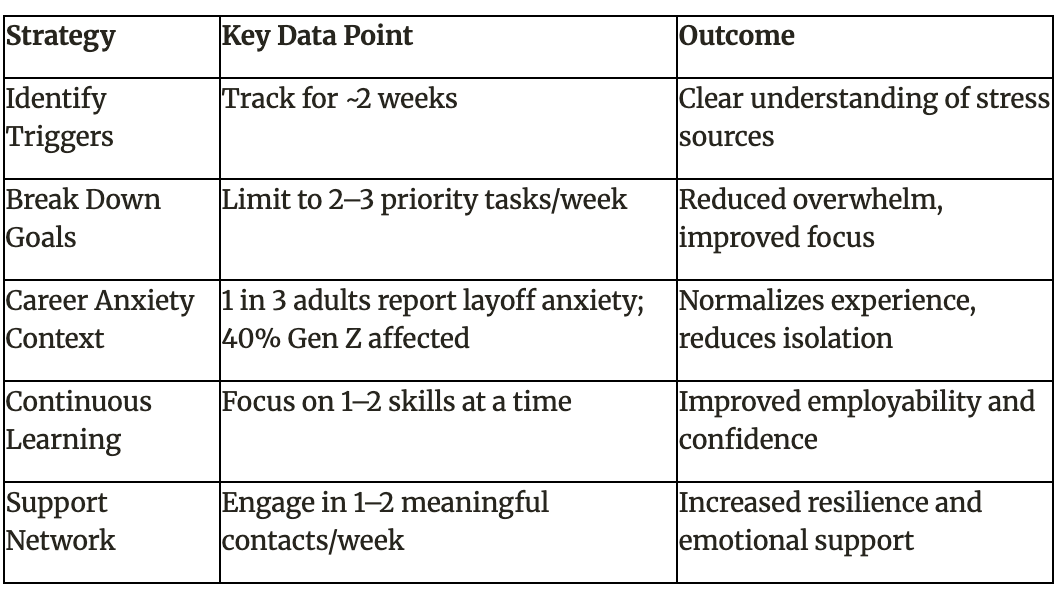
Career anxiety is common but manageable with clear, practical steps. Invest regularly in learning to stay confident and marketable, and cultivate emotional resilience. Use professional help when anxiety impairs daily life. Coaches and therapists provide targeted guidance. Taken together, these strategies help you move from feeling trapped by uncertainty to making deliberate choices. It protects your well-being and career trajectory.