
A Guide to Managing Burnout in a High-Pressure Career

Burnout has become an increasingly common challenge in today’s fast-paced, high-pressure work environments. A Forbes article cites a 2025 study that reveals alarming data related to job burnout. Right now, it is at an all-time high, with 66% reporting feeling burnt out at work. Even worse, things may worsen with return-to-office (RTO) mandates, exacerbating stress for workers.
Professionals in high-pressure workplaces are expected to meet tight deadlines, exceed performance targets, and remain constantly available. This often happens at the cost of their mental and physical well-being. Over time, this relentless pressure can lead to emotional exhaustion, reduced productivity, and a loss of motivation.
Burnout is not simply about working long hours, but about prolonged stress without adequate recovery or support. Left unmanaged, it can affect both career growth and personal life. The good news is that burnout is preventable and manageable with intentional strategies.
This article explores actionable ways to manage burnout in demanding careers.
Set Firm Boundaries and Defend Them
According to Workplace Strategies for Mental Health, even in the best workplaces, people experience stress due to a lack of good personal boundaries. Without boundaries, they end up accepting more work than is reasonable or feeling uncomfortable voicing concerns. Some are unable to say no, while others fear failure.
In high-pressure roles, trying to always be available can quickly blur these lines, leading to constant stress and fatigue. Establishing clear boundaries between work and personal life can help them reduce the risk of burnout. Setting boundaries means defining when you are available for work and when you are not. More importantly, you must defend them by consistently sticking to those limits.
For example, avoiding after-hours emails or setting clear “offline” times can help create mental separation from work. Communicate these boundaries professionally with colleagues and managers to ensure clear expectations. While it may feel uncomfortable at first, defending your time is essential for long-term productivity and well-being.
Manage Workload and Expectations
Workplace Health and Safety Show highlights the perils of a heavy workload for employees. Working beyond 55 hours per week can lead to a 17% higher risk of heart disease and a 35% higher risk of stroke. Chronic workload stress makes employees susceptible to turnover, disengagement, and burnout. Unclear expectations also contribute to burnout.
Taking proactive steps to manage both can reduce stress levels. This includes prioritizing tasks, delegating when possible, and having honest conversations about your capacity with supervisors. Breaking large projects into manageable steps can make workloads feel less overwhelming.
Moreover, you should accept that not every task requires perfection. Rather, focusing on high-impact work can improve efficiency. Setting realistic deadlines and clarifying deliverables helps prevent unnecessary pressure. For instance, if multiple deadlines clash, discussing priorities with your manager can lead to better outcomes than silently struggling.
Find Easy Growth Routes
Career growth is a priority for people working in high-pressure roles. However, it does not always have to come from taking on more responsibility or working longer hours. Moreover, for people looking to upskill for growth, trying to do too much can add extra pressure. Fortunately, there are easy growth routes for people who do not want to settle for less.
Consider the example of an entry-level nurse who works in a high-stress environment where burnout rates are high. If she wants to advance to a master’s degree with specialization in family nursing, she can pursue an online degree. The Cleveland State University MSN-FNP degree is an example. Since it is available in online mode, it can be pursued without going back to school or taking a career break.
Focusing on such “easy growth routes” can help you progress without overwhelming yourself. Small, consistent improvements often lead to meaningful career advancement over time. By choosing growth paths that align with your current capacity, you can continue developing professionally without sacrificing your well-being.
Prioritize Rest and Recharge
Rest is often overlooked in high-performance environments because of the sheer number of things that have to be done. Yet it is essential for maintaining productivity and mental clarity. Regular breaks, adequate sleep, and intentional downtime allow the body and mind to recover from stress.
Adopt actionable and simple practices such as taking short breaks during the workday, engaging in physical activity, or practicing mindfulness. Even small moments of rest can improve focus and reduce fatigue. For instance, stepping away from your desk for a brief walk can reset your energy levels and improve concentration.
Consider taking extended breaks from work every few months to recharge physically and emotionally. Do not feel guilty about prioritizing rest, because it is not a luxury, but a necessity for sustained performance. Without it, even the most capable professionals will eventually experience burnout.
Build a Dependable Support Network
An article published by The HR Director emphasizes the importance of executive networks. Executive leadership expert Carolin Fourie, Managing Partner at Signium Germany, notes, “Executives who have invested in strong networks don’t face such changes alone. They have advisors, connectors, and sounding boards ready to step in.”
Whether you are a leader or a beginner, having a strong support system is crucial for managing stress in demanding careers. This network can include colleagues, mentors, friends, and family members who provide guidance, encouragement, and perspective.
Supportive colleagues can help share workloads, offer advice, or provide a space to discuss challenges. Mentors can guide career decisions and help you navigate high-pressure situations more effectively. Outside of work, personal relationships offer emotional support and a sense of balance.
FAQs
Which professions have the highest burnout rates?
Professions with the highest burnout rates often include healthcare, teaching, finance, law, and technology. These fields involve high responsibility, long hours, and emotional or cognitive strain. Constant performance pressure and limited recovery time contribute significantly to burnout in these demanding roles.
How can performance pressure harm professionals?
Performance pressure can lead to chronic stress, anxiety, and reduced job satisfaction. Over time, it may cause mental exhaustion, decreased productivity, and even physical health issues. It can also impact decision-making and creativity, ultimately reducing overall professional effectiveness and long-term career sustainability.
How can you avoid overcommitting?
Avoiding overcommitment requires clear prioritization and the ability to say no when necessary. Assess your capacity before taking on new tasks, and focus on high-impact responsibilities. Communicating limits early and setting realistic expectations helps prevent unnecessary workload and reduces the risk of burnout.
Key Takeaways
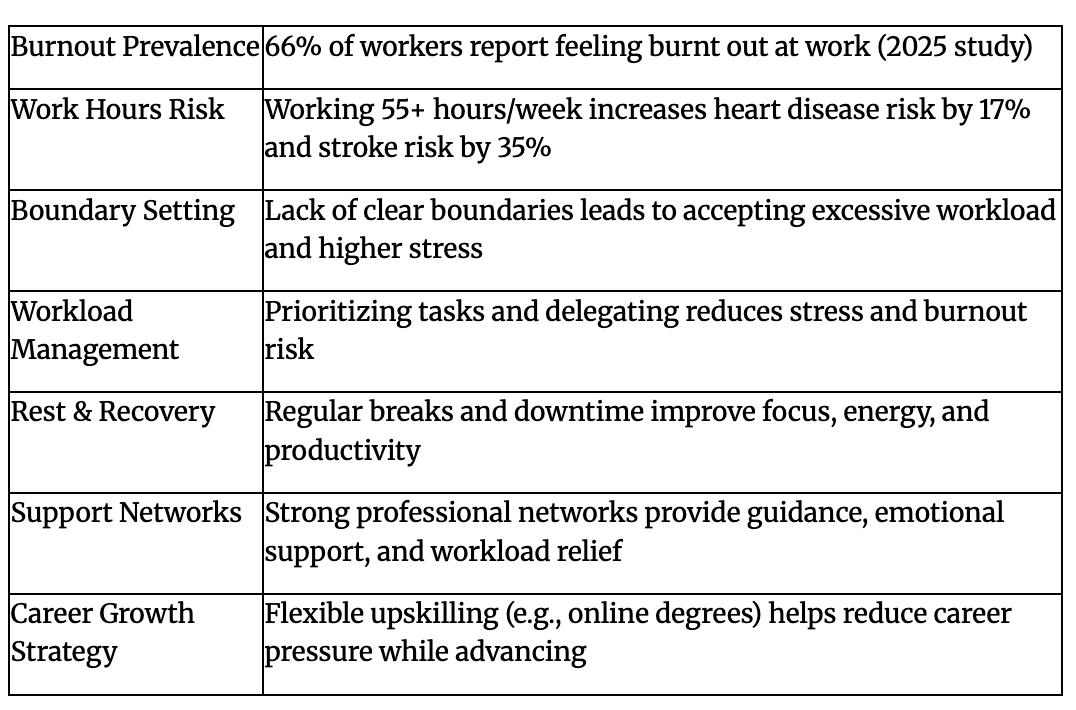
Managing burnout in a high-pressure career is not about avoiding ambition or reducing effort. Rather, it is about creating a sustainable approach to success. Burnout is often the result of prolonged imbalance, but small, intentional changes can restore stability. In a world that increasingly values constant productivity, prioritizing well-being is a powerful decision. By adopting these strategies, individuals can avoid burnout and achieve more at work.