
What Your Career Dissatisfaction May Be Trying To Tell You

Most people have experienced moments when work feels heavier than it used to. You may find yourself dreading Monday mornings, questioning your career choices, or wondering whether another job would finally make you happier. In those moments, thinking about a career switch seems incredibly tempting, and for many, it’s a serious option.
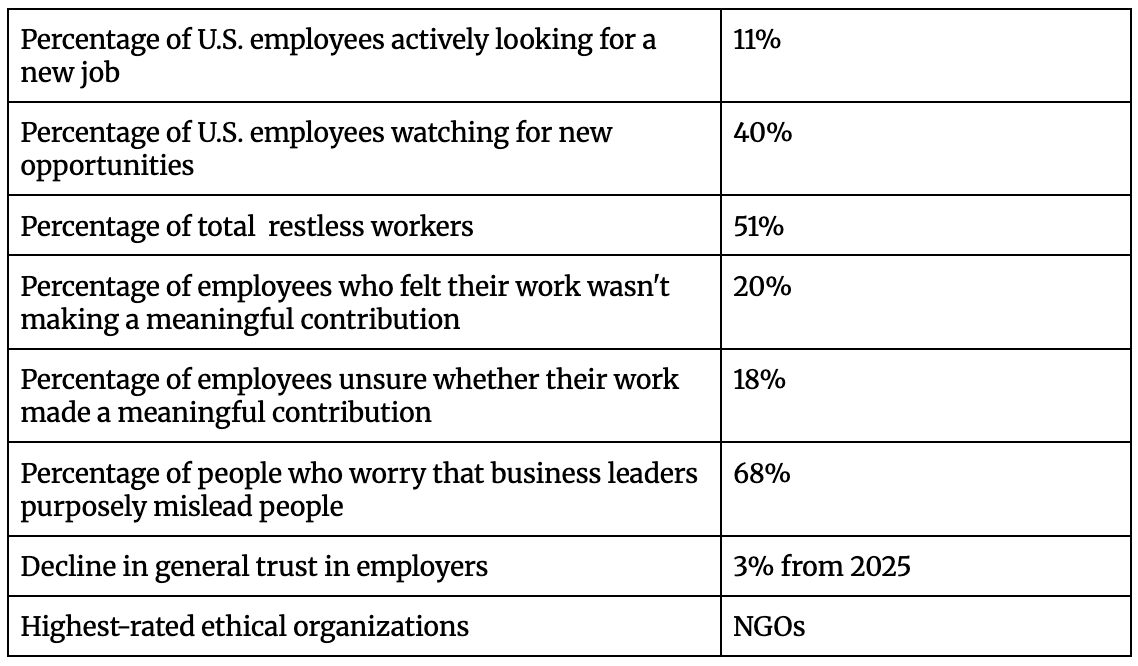
In Q4 2025, 51% of U.S. employees said they were either actively looking for a new job (11%) or watching for opportunities (40%). This was the highest share of restless workers Gallup has recorded since 2015. This phenomenon was dubbed the "Great Detachment," a period in which workers are seeking new opportunities.
Even so, changing jobs is not an easy decision for most to make. After all, there’s no guarantee that your next job won’t be disappointing as well. Thus, it helps to understand what your dissatisfaction may actually be trying to communicate. This is what we’ll explore today, so read on to learn more.
Your Dissatisfaction Is Often More Specific Than “I Need a New Job”
One of the biggest mistakes people make is treating career dissatisfaction as a single problem with a single solution. In reality, frustration at work often comes from a combination of factors that build gradually over time.
For one person, the issue may be a lack of challenge after years in the same position. Another may feel overwhelmed because expectations continue to grow without additional support.
Some employees enjoy their responsibilities but feel disconnected from the workplace culture or leadership. Others have simply reached a stage of life where flexibility, stability, or family time has become more valuable than career advancement.
As you can see, there are countless factors at play, which is why looking beneath the surface reveals where the real problem lies. Instead of asking whether you need a new career, consider what areas your current one disappoints in.
Do you need more responsibility, clearer feedback, stronger relationships with colleagues, greater autonomy, or opportunities to learn new skills? Likewise, trust is another common factor behind job dissatisfaction.
As the Edelman Trust Barometer notes, 68% of people worry that business leaders purposely mislead people. It’s no surprise, then, that general trust in employers has also fallen by 3% from 2025. Unsurprisingly, the most ethical organizations that hit the highest scores for being ethical were NGOs.
It’s only when you identify these specific factors that are creating your dissatisfaction that you can move forward. Even if you have already given your two-week notice, you need to know these factors to keep your eyes open for similar gaps in new opportunities.
Your Career Problem Could Really Be a Meaning Problem
Many people assume a satisfying career should leave them feeling accomplished at the end of each day. However, accomplishment and meaning are not always the same thing. You can complete every task on your list while still wondering whether your work genuinely benefits anyone.
This feeling often develops in roles where employees rarely see the impact of their efforts. Their work may support customers, patients, students, or communities, yet those outcomes remain distant and invisible. Over time, that disconnect can create the impression that their contributions have little value. This is more common than you might imagine.
According to one survey by YouGov, 20% of American workers felt their work wasn’t making a meaningful contribution to the world. Likewise, another 18% weren’t sure about the contribution their work had. That’s nearly 40% of people who feel negative or vague about what purpose their work has.
This is why people often find themselves motivated and rejuvenated after volunteering. They experience firsthand how good work with a real-world impact feels. It’s why you often hear about corporate workers deciding to pivot to social work or people-focused jobs. They might sign up for a traditional online MSW program and, within a few years, switch to what they feel is more meaningful work.
As Keuka College notes, such programs are 100% online, so they get to continue working their current jobs while studying. Once they find an opening that feels like everything they’ve been looking for, they leave.
Of course, meaning does not always require changing careers entirely. Some people rediscover purpose by mentoring junior colleagues or taking on projects that connect more directly with people who benefit from their efforts.
Don’t Let Social Media Decide Whether Your Career Is Successful
How we look at careers has totally changed over the last ten years. If you scroll through social media, you’re constantly told to find work that perfectly matches your passion, inspires you daily, and never gets boring. It sounds amazing, but let’s be real: that’s just not how actual long-term careers work.
Every profession includes routine tasks, difficult colleagues, frustrating periods, and moments of uncertainty. Expecting work to deliver constant fulfillment can create disappointment even when a career is objectively rewarding. This can be a hard pill to swallow.
As psychologist Tessa West notes, when you expect to love your job, you’re more likely to quit it. She explains that social media feeds are full of curated posts about finding your passion and that doing what you love is easy. However, many of us will never find this love.
So, rather than chasing an idealized version of career happiness, it can be more helpful to evaluate whether your work supports the life you want to build. A job may provide financial security, opportunities to learn, supportive coworkers, flexibility, or room for future growth, even if every day is not exciting.
Comparing your everyday experience to carefully selected highlights from strangers online is always going to create an unfair standard. Real career satisfaction often develops gradually through competence, meaningful relationships, and confidence that your work is helping you move toward your larger goals.
Frequently Asked Questions
How long should I stay in a job I no longer enjoy?
There’s no fixed timeline, but if you've consistently felt unhappy for several months despite trying to improve your situation, it may be time to reassess. Before leaving, identify what's causing your dissatisfaction and explore whether changes within your current role could solve the problem.
What are the early signs that it's time to change careers?
Common signs include feeling mentally checked out, losing interest in learning new skills, dreading work every day, or realizing your values no longer align with your profession. If these feelings persist and limit your growth, it may be worth exploring other career paths.
Why do successful people still feel unhappy in their careers?
Career success doesn't always translate into personal fulfillment. Someone may earn a good salary or hold an impressive title but still feel disconnected from their work, lack purpose, or struggle with workplace culture. Satisfaction depends on much more than external achievements alone.
Key Numbers & Facts at a Glance
Ultimately, career dissatisfaction is often viewed as a warning that it is time to leave. Sometimes that instinct is correct, but many situations call for a deeper look before making such a major change. Taking the time to identify the underlying factors behind your dissatisfaction is the most important thing you can do in this regard.
You might realize that, yes, you do need a completely new employer. But you might also find that you'd be much happier just switching teams at your current company. That said, sometimes the right answer is indeed making the switch, so be as objective as you can when you’re making this decision.