
Why Burnout Is a Leadership Problem Before It's an HR Problem

Burnout often lands on HR's desk. Companies introduce wellness programs, expand mental health benefits, or encourage employees to take time off.
These efforts help, but they rarely fix the conditions that caused the problem. That's because those conditions are usually created long before HR becomes involved. If you lead a team, you shape the work people experience every day.
You decide how priorities are set, how workloads are managed, and how managers support their teams. These decisions influence stress more than any wellness initiative.
Over time, those workplace conditions begin to take a toll. Burnout usually grows after months of unmanaged pressure, unclear expectations, and constant urgency. That's why leadership has the biggest influence over whether employees stay engaged or gradually burn out.
Burnout Often Starts With Leadership
Your employees can only do their best when the work itself is manageable. Expecting teams to manage constant deadlines, shifting organizational priorities, and unclear roles creates stress that builds over time.
Telling people to be more resilient doesn't remove those pressures. Leaders should start by looking at their systems. Ask whether employees know what matters most, can question unrealistic deadlines, and receive workload adjustments when priorities change.
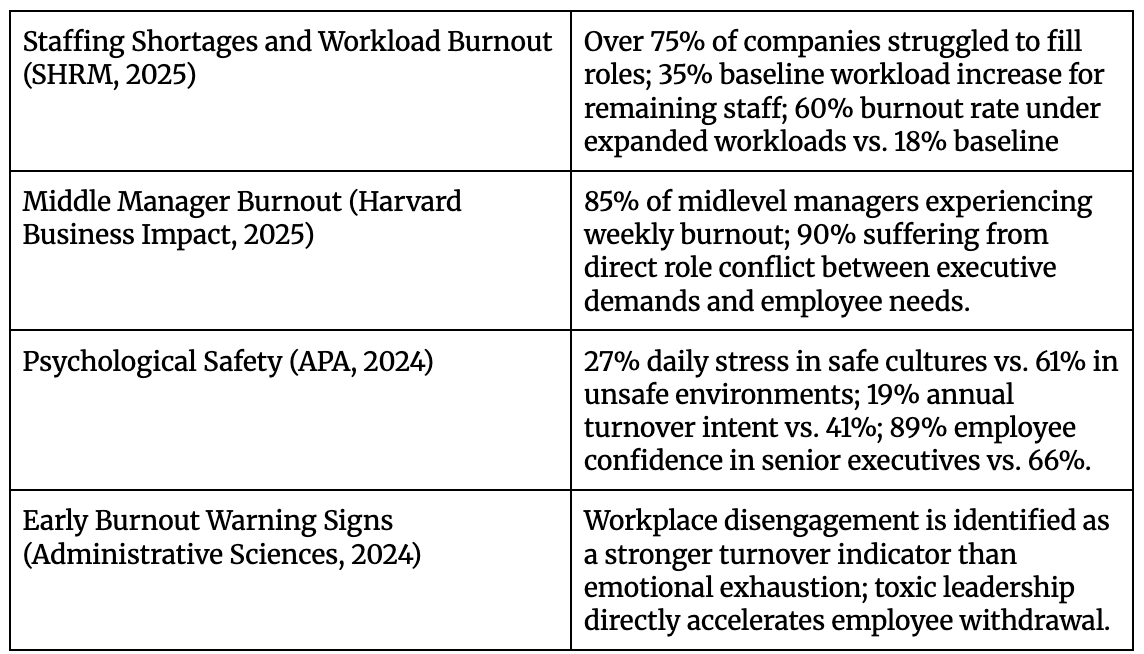
According to SHRM's 2025 State of the Workplace, over three-quarters of organizations struggled to fill full-time positions in 2024. As vacancies remained open, about 35% of employees said they took on heavier workloads.
Among those employees, more than 60% reported feeling burned out, compared with 18% whose workloads did not increase. These findings show how staffing decisions can quickly affect employee well-being and place more pressure on the remaining team members.
The numbers point back to one issue. Leadership influences the conditions employees experience every day.
Great Managers Aren't Born, They're Developed
Many managers reach leadership because they're good at their jobs. Leading people requires another set of skills. You need to spot early signs of burnout, hold difficult conversations, and set expectations that people can actually meet.
These skills don't appear after a promotion. They develop through training and practice. Some professionals build that knowledge through advanced education, including an EdD in counseling psychology.
Programs like these cover leadership, counseling principles, and evidence-based approaches to supporting people and organizations. According to American International College, that integrated curriculum also prepares students to become capable counselors and educators.
That kind of preparation becomes valuable as leadership responsibilities grow. Without continued development, many managers struggle to meet growing expectations while caring for their teams.
Harvard Business Impact reports that 85% of middle managers experience burnout every week. Nearly 90% of managers feel conflicted between senior leaders’ expectations and their teams’ needs.
This constant pressure can wear down managers and affect how they support the people who rely on them.
Psychological Safety Starts With Everyday Leadership
Psychological safety comes from daily interactions. Your employees should feel comfortable asking questions, admitting mistakes, and raising concerns without blame. You can create that environment through consistent actions.
Listen before responding, admit your mistakes, and encourage different opinions. Follow through when employees raise concerns. These habits build trust because employees know their input matters.
That trust becomes even more important during stressful periods. The American Psychological Association (APA) found clear differences between psychologically safe and unsafe workplaces.
Amy Edmondson, PhD, describes psychological safety as a workplace where people feel comfortable. They feel safe discussing errors and voicing worries without the risk of facing judgment or negative consequences.
The APA survey shows what that looks like in practice. Employees who felt psychologically safe reported much lower daily stress levels, at 27%, compared with 61%.
Only 19% planned to change jobs within a year, compared with 41% in less supportive workplaces. Psychologically safe employees were also less likely to say work harmed their mental health, at 18% versus 57%.
Confidence in senior leadership was also higher, reaching 89% compared with 66%. Your daily leadership habits shape these outcomes by influencing how employees feel, perform, and respond to workplace challenges.
The Warning Signs Appear Before Employees Leave
Burnout doesn't appear in a single week. It develops after workplace stress continues without enough recovery or support. Employees rarely leave without warning. In many cases, the signs of burnout appear months before they decide to move on.
Watch for changes in behavior. Employees may pull back from discussions, lose motivation, or make more mistakes than usual. Regular check-ins help you spot those changes early. So do realistic deadlines and honest conversations about workload.
The research supports that approach. A 2024 study published in Administrative Sciences examined responses from 309 employees in Portugal and Angola. It found that burnout increased employees' intentions to leave.
However, disengagement had a much stronger effect than emotional exhaustion. The researchers also found that toxic leadership increased disengagement, which then made employees more likely to consider leaving.
The results point to one clear takeaway. Leaders should pay close attention when employees begin withdrawing from their work or team. That makes early intervention especially important. Address disengagement before it develops into burnout, while employees are still open to support.
People Also Ask
What is the number one leadership behavior that causes employee burnout?
Micromanagement is one of the fastest ways to burn out a team. It limits employee autonomy and creates constant pressure to meet expectations. Over time, that lack of trust increases stress, lowers motivation, and reduces engagement, even among high-performing employees.
How can you tell if an employee is burned out or just unmotivated?
Look at their past performance. Burned-out employees often start as reliable, engaged contributors before their energy and focus decline. Unmotivated employees usually show a more consistent pattern. A sudden drop in performance, combined with emotional withdrawal, often points to burnout instead.
How can leaders protect themselves from burnout while supporting their teams?
Start by setting healthy boundaries for yourself. Protect your recovery time, delegate responsibilities, and focus on the most important priorities. When you model sustainable work habits, your team is more likely to follow them and feel comfortable doing the same.
Leadership and Burnout at a Glance
Leadership Sets the Tone for Burnout Prevention
Leadership shapes the employee experience every day. HR supports employees with resources and policies, but leaders influence the conditions they work in.
Review your team's workload often, give managers the training they need, and create space for honest conversations before problems grow. Employees don't expect a perfect workplace. They expect leaders who listen, respond, and make thoughtful decisions.
These habits reduce burnout, strengthen trust, and help people do good work without paying for it with their well-being.