
How to Help Your Child Build Resilience

As a parent, you want your child to feel confident, capable, and ready to handle life’s challenges. Building resilience is the best way to achieve these goals. However, most parents struggle to instill these qualities in their children because they don’t know how to do it.
According to NIH, there are a variety of resilience resources that can help foster a positive mindset after experiencing stress. These include traits such as hope, optimism, and self-compassion, and strong social connections. Greater levels of positivity can protect individuals from the adverse effects of stress.
You can support this growth by taking some actionable steps from the start. With your encouragement, your child can develop the confidence and emotional resilience they need to navigate life’s ups and downs. This article dives into practical strategies that help nurture resilience in your child.
Let Them Struggle
“For most parents, keeping their children safe is instinctual, so it's only reasonable that this instinct kicks in when a child is experiencing a difficult situation. However, unless the situation is life-threatening, it's often better to let your child navigate the problem on his/her own,” says Drew Heckman, Ph.D. Through this process, your child will emerge more resilient, equipped with better coping strategies, as noted by Parenting.org.
Allowing your child to struggle does not mean leaving them without support. It means giving them the space to solve problems, make mistakes, and discover their own abilities. When you step in too quickly, your child may miss valuable opportunities to learn patience, decision-making, and confidence. Instead, you can offer encouragement, ask thoughtful questions, and remind them that challenges are a normal part of growth.
You can help your child understand that setbacks are not failures but chances to learn and improve. When they face difficulties and overcome them, they build trust in their own skills. Letting them struggle in a supportive way helps them develop resilience and prepares them to handle future obstacles with confidence.
Model Healthy Coping
According to Kiddipedia, uncomfortable emotions are a part of life that can't be escaped. One of the most important things you can do to support your children's emotional health is to teach them how to handle these tough feelings. Since children often mirror their parents' behavior, equipping your children with effective coping skills means modeling the skills as a parent.
The way you respond to stress, challenges, and surprises teaches your child a great deal about handling unexpected situations. Demonstrating healthy coping strategies teaches your child that it's possible to handle tough emotions constructively. You can use healthy strategies such as taking breaks, staying organized, or seeking support when needed. Your actions teach your child that challenges are a natural part of life.
You can also encourage your child to practice these coping skills in everyday situations. When your child observes you tackling challenges with calm and confidence, they're more inclined to adopt the same habits themselves. Your advice empowers them to manage stress, overcome obstacles, and confront challenges with a more robust mindset.
Encourage Them to Seek Help Where Needed
Helping your child build resilience also means teaching them that asking for help is a sign of strength, not weakness. You can encourage your child to talk about their feelings, share their worries, and seek guidance when challenges feel overwhelming. Let your child know that they do not have to handle every difficult situation alone, and that trusted support can help them find better solutions.
For instance, counselors can be helpful by providing guidance, emotional support, and strategies that help children manage stress. Professionals with a Master’s in School Counseling develop skills in communication, child development, and intervention techniques. This advanced training helps them better support students and families while creating positive environments where children can build resilience.
According to St. Bonaventure University, the online MSED in School Counseling provides professionals with the tools they need to support and guide the youth. Seeking help early can provide your child with valuable resources to manage emotions and overcome obstacles. Moreover, this helps them develop resilience while learning the importance of connection and cooperation.
Teach Emotional Regulation
Teaching emotional regulation helps your child understand and manage their feelings in healthy ways. Child Mind Institute notes that self-regulation refers to your ability to control emotions in response to different situations. It involves resisting strong emotional reactions when something triggers you and managing frustration without blowing up. These skills are essential for children as they grow. It allows them to guide their actions toward their goals, even amidst the chaos of life and their own emotions.
You can support your child by helping them recognize emotions and understand that every emotion has a purpose. If your child is feeling upset, you can support them by guiding them through some calming strategies. Encourage deep breathing or have a conversation about what’s on their mind. These simple actions can make a big difference in helping your child gain control over their reactions.
By creating a nurturing environment, you allow them to express their emotions freely, without the fear of being judged. You can encourage your child to consider solutions instead of focusing only on problems. Over time, these skills help your child respond to challenges with greater confidence and develop resilience that supports them throughout life.
FAQs
How can parents be good role models for their children?
Parents can be good role models by demonstrating kindness, honesty, patience, and resilience in everyday life. Your child learns more from what you do than from what you say. You must handle challenges calmly, communicate respectfully, admit mistakes, and practice healthy habits. These consistent actions encourage your child to develop similar positive behaviors.
What is the importance of being resilient?
Being resilient helps you recover from setbacks, adapt to change, and face challenges with confidence. It strengthens your ability to manage stress, solve problems, and keep moving forward despite difficulties. Resilience also supports emotional well-being, builds self-confidence, and prepares you to handle future obstacles with a positive, determined mindset.
How to make your child capable of dealing with challenges?
You can help your child face age-appropriate challenges instead of solving every problem for them. Encourage effort, teach problem-solving skills, listen to their feelings, and praise persistence. Model healthy coping strategies, provide consistent support, and celebrate progress. These experiences build confidence, resilience, independence, and the ability to overcome future obstacles.
Key Takeaways
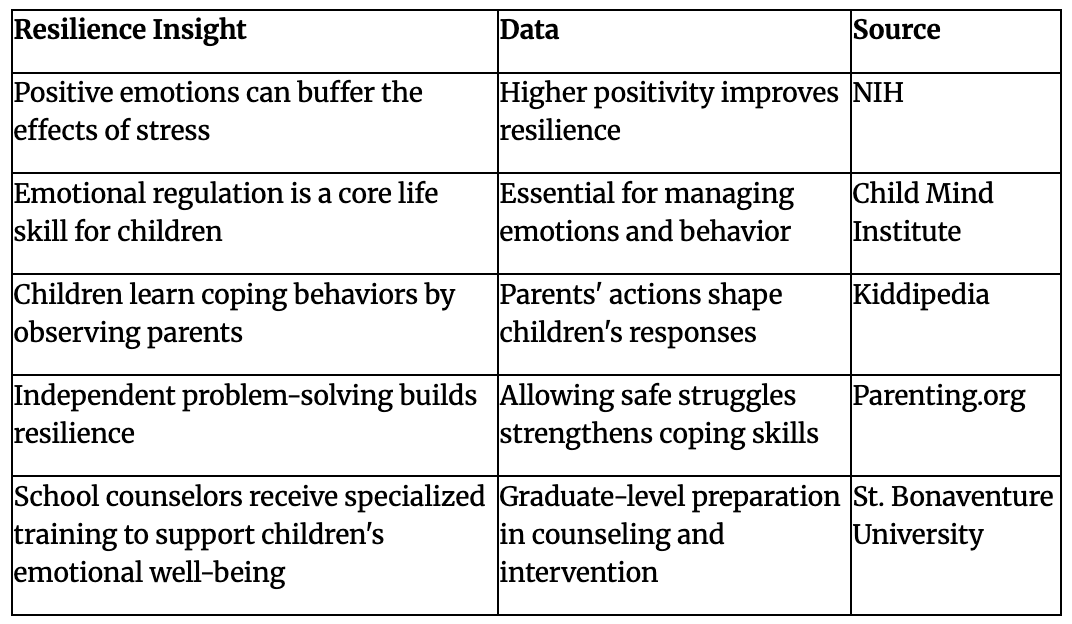
Helping your child build resilience is a meaningful investment in their future. Every child grows at their own pace, and your steady encouragement can make a lasting difference along the way. Strive to cultivate a warm and encouraging relationship with your child, where they know their feelings are recognized.
With time, patience, and trust, you can nurture your child's inner strength. This strength will equip them to approach life with confidence, hope, and an eagerness to dive into new experiences.